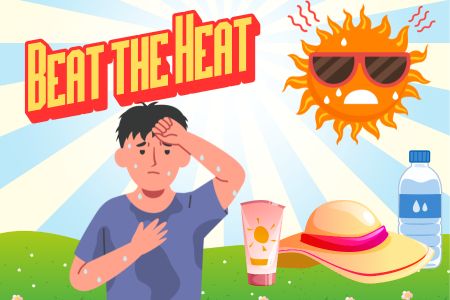
beat the heat sun with sunglasses a man sweating
Heat Stroke Awareness
Beat the Heat This Summer
Heatstroke is a condition caused by the body overheating. This usually happens because of exposure to high temperatures or physical activity in high temperatures for too long. There are a few stages of heat injury, and heatstroke is the most serious. It can happen if body temperature rises to 104 F (40 C) or higher. Heatstroke is most common in the summer months.
Heatstroke needs emergency care. If it's not treated, heatstroke can quickly damage the brain, heart, kidneys and muscles. This damage gets worse the longer treatment is delayed, which increases the risk of serious complications or death.
CALL 911!
Symptoms of Heat Stroke Include:
 High body temperature.
 A core body temperature of 104 degrees Fahrenheit (40 degrees Celsius) or higher is the main sign of heatstroke.
Change in mental state or behavior.Confusion, agitation, slurred speech, irritability, delirium, seizures and coma can all result from heatstroke.
Change in sweating pattern. In heatstroke brought on by hot weather, skin feels hot and dry to the touch. However, in heatstroke brought on by strenuous exercise, sweating may be profuse.
Nausea and vomiting. Someone with heatstroke may feel sick to their stomach or vomit.
Flushed skin. Skin may turn red as body temperature increases.
Rapid breathing. Breathing may become rapid and shallow.
Racing heart rate. Pulse may significantly increase because heat stress places an extreme burden on the heart to help cool the body.
Headache. Throbbing head.
Prevention
Heatstroke is predictable and preventable. Take these steps to prevent heatstroke during hot weather:
Wear loose-fitting, lightweight clothing.Protect against sunburn. Sunburn affects your body's ability to cool itself, so protect yourself outdoors with a wide-brimmed hat and sunglasses. And use a broad-spectrum sunscreen with an SPF of at least 15. Apply sunscreen generously, and reapply every two hours — or more often if you're swimming or sweating.
Drink plenty of fluids. Stay hydrated to help your body sweat and maintain a normal body temperature.
Take extra precautions with certain medicines. Be on the lookout for heat-related problems if you take medicines that can affect your body's ability to stay hydrated and dissipate heat.
Never leave anyone in a parked car. This is a common cause of heat-related deaths in children. When a car is parked in the sun, the temperature in the car can rise 20 degrees Fahrenheit (more than 11 degrees Celsius) in 10 minutes.
Take it easy during the hottest parts of the day. If you can't avoid strenuous activity in hot weather, drink fluids and rest frequently in a cool spot. Try to schedule exercise or physical labor for cooler parts of the day, such as early morning or evening.